Understanding the Big Brake Kit Installation Cost
The journey to superior braking starts with a clear-eyed look at the initial expenses. The sticker price of the kit itself forms the foundation of the Big Brake Kit installation cost, and this component alone can swing wildly.
Entry-level, street-focused kits for popular tuner cars might begin around $1,500 to $2,500 per axle, often utilizing quality but relatively simpler components.
However, stepping up to premium, race-proven brands featuring fully forged calipers, two-piece floating rotors with specialized coatings, and exotic materials like carbon-ceramic can push the kit price well into the $5,000 to over $10,000 range per axle.
For the performance enthusiast, the dedicated track day warrior, or simply the driver who prioritizes ultimate safety and control, few upgrades are as transformative as a high-quality Big Brake Kit (BBK).
But before you can enjoy that satisfying, predictable, and fade-free stopping power, you need to understand the comprehensive total of the Big Brake Kit installation cost.
This isn’t just about the price tag of the beautiful multi-piston calipers and dinner-plate-sized rotors; it’s a deep dive into the parts, the labor, the required peripherals, and the often-overlooked variables that determine your final investment.
Getting a BBK installed is a significant automotive undertaking, and being prepared for the full spectrum of costs will ensure a smooth, wallet-friendly experience.
The Structure of the Cost: Parts vs. Labor
The overall Big Brake Kit installation cost is fundamentally a balance between the price of the specialized components and the expense of the expert labor required to fit them to your vehicle.
These two pillars represent the vast majority of the expenditure, but their proportions and specific costs can vary dramatically based on the kit’s quality and the shop performing the work. Understanding this structural breakdown is the key to accurately budgeting for this significant performance upgrade.
The Cost of Performance for Specialized BBK Components
The component cost, which is the Big Brake Kit itself, is typically the largest and most variable part of the total bill. This is where the engineering sophistication and material science truly dictate the price.
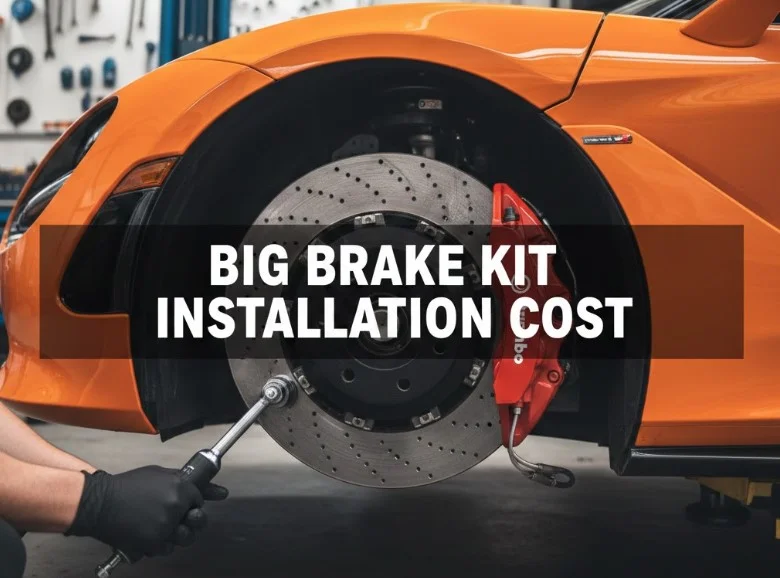
Caliper design is a primary cost driver; while basic kits may feature good quality cast calipers, premium setups utilize forged aluminum calipers with multiple pistons, often six or eight, which are much more expensive to manufacture but offer superior rigidity, less unsprung weight, and significantly better heat management.
The piston count and caliper material directly correlate with the kit’s price, with high-end, race-proven calipers easily costing thousands of dollars per pair alone.
Secondly, the rotors are a major component of the Big Brake Kit installation cost. Most BBKs feature large-diameter, two-piece rotors, which consist of a lightweight aluminum hat bolted to a high-carbon iron friction ring.
This two-piece design is pricier than a simple one-piece rotor because it allows the friction surface to expand and contract independently, minimizing warping, improving cooling, and reducing weight.
The rotor’s surface treatment, whether drilled, slotted, or both, also adds complexity and cost, though these features are essential for venting brake dust and gasses under extreme heat.
Furthermore, the selection of the brake pad compound and the inclusion of stainless steel braided brake lines (which resist expansion under pressure for a firmer pedal feel) round out the parts cost, making it clear that you are paying a premium for engineering designed to handle forces far beyond standard street use.
The Cost of Expertise for Professional Labor
While the parts are expensive, the labor component of the Big Brake Kit installation cost is critical and non-negotiable for safety.
This job is far more complex than a standard brake pad and rotor swap, requiring a higher level of technical skill, often driving up the shop’s hourly rate, which typically ranges from $100 to $200 or more per hour at specialty or performance tuning facilities.
The installation is meticulous and time-consuming. It involves removing the original braking components, often requiring the modification or removal of the factory dust shields to accommodate the larger rotors and calipers.
The installation requires the precise mounting and torquing of the new calipers and brackets, followed by the installation and careful routing of the new braided brake lines.
The most critical step affecting labor time is the thorough bleeding of the hydraulic system, which must be done meticulously to purge all air pockets, often requiring a pressure or vacuum bleeder to ensure a perfectly firm and safe brake pedal.
If air remains in the system, it can lead to compromised or total brake failure. Due to this complexity, an experienced technician will typically require 3 to 6 hours for a quality, single-axle BBK installation, meaning the labor cost alone can be hundreds of dollars, adding significantly to the final Big Brake Kit installation cost.
Attempting to reduce this cost by foregoing professional installation is strongly discouraged, as the risks associated with improper brake assembly far outweigh any potential savings.
The Hidden Costs: What Else Do You Need to Budget For?
While the cost of the actual components and the labor to install them form the bulk of the expense, any veteran performance enthusiast will caution you about the crucial, often overlooked financial factors, the hidden costs, that can dramatically inflate the total Big Brake Kit installation cost.
Ignoring these peripherals and potential compatibility issues is the most common cause of budget overruns in a braking upgrade project. Preparation for these items is essential for a smooth, single-trip installation.
The Non-Negotiable Consumables: Brake Fluid
The installation of a Big Brake Kit mandates a complete, professional bleed of the entire hydraulic system. Since these large, high-performance kits are designed to withstand and generate significantly higher operating temperatures than a stock setup, they require high-temperature racing or performance brake fluid.
Standard DOT 3 or DOT 4 fluid will boil under the stress a BBK is capable of handling, leading to a catastrophic loss of braking power known as vapor lock. This essential fluid upgrade, often requiring a premium DOT 4 or a DOT 5.1-compatible fluid with a higher dry boiling point, is an added cost.
Depending on the fluid quality and the system volume, budgeting between $50 and $150 just for the fluid is a realistic, necessary expense that is separate from the labor to perform the bleed.
The Wheel Clearance Conundrum: A Major Financial Risk
By far the most significant and most common hidden cost is wheel incompatibility. Big Brake Kits earn their name by having dramatically larger calipers and rotors. The caliper, particularly the width of the housing where the multi-pistons reside, frequently interferes with the inside of the wheel spokes or the wheel barrel itself.
A few millimeters of inadequate clearance means the wheel simply will not turn, or worse, will severely damage the caliper upon rotation.
To solve this clearance problem, a driver has two main options, both of which add substantially to the Big Brake Kit installation cost:
1. New Wheels:
The most effective, but most expensive, solution is purchasing an entirely new set of wheels specifically designed with BBK clearance in mind. These must have the correct diameter, offset, and spoke profile to accommodate the large calipers. This single cost can easily add $1,000 to over $4,000 to the total project, transforming a brake upgrade into a wheel and brake package.
2. Wheel Spacers:
A cheaper but sometimes less desirable solution is using hub-centric wheel spacers. Spacers push the entire wheel and tire assembly outward, providing the necessary distance between the wheel spokes and the caliper.
High-quality, hub-centric spacers for all four corners can add $150 to $400 to the cost, not including the labor for installation. Crucially, the use of spacers can also necessitate longer wheel studs or bolts to maintain safe thread engagement, adding another minor expense and a complexity layer to the overall Big Brake Kit installation cost.
Fine-Tuning and Calibration: System Adjustments
Less common but highly relevant for dedicated enthusiasts or custom installations is the potential need to adjust the vehicle’s braking characteristics after the installation. A BBK, especially when only installed on the front axle, significantly alters the brake bias, the distribution of braking force between the front and rear wheels.
If the front brakes become too aggressive relative to the rear, the system’s balance is compromised, which can lead to premature rear wheel lockup under heavy braking, creating a dangerous oversteer condition.
While most reputable BBK manufacturers engineer their kits to maintain an appropriate bias with the factory rear brakes, custom or mixed-and-matched systems may require the addition of a proportioning valve.
This specialized component allows the technician to manually dial back the hydraulic pressure going to the rear calipers.
The cost of a quality proportioning valve and the additional, meticulous labor required to install and tune it on the road or track will contribute another notable expense to the overall Big Brake Kit installation cost. This fine-tuning ensures the ultimate safety and maximum performance potential of the investment.
Is the Big Brake Kit Installation Cost Worth It?
When you total the cost of a premium Big Brake Kit, the specialized high-temp fluid, the professional labor, and the potential surprise expense of new wheels, the final Big Brake Kit installation cost can be a five-figure sum.
This naturally raises the essential question: is this massive investment truly worth it? The answer is a resounding yes, but only if your driving habits, vehicle modifications, or operating environment push your car beyond the thermal and mechanical limits of the stock braking system.
For the right application, the BBK is not merely an upgrade; it is a critical investment in safety, consistency, and performance longevity.
The Paramount Value: Conquering Brake Fade
The single most compelling justification for the entire Big Brake Kit installation cost is the elimination of brake fade. Brake fade occurs when the stock components; rotors, pads, and fluid, are overwhelmed by heat, causing the friction materials to break down and the brake fluid to boil.
The result is a terrifying, sudden drop in stopping power and a soft, spongy brake pedal. Stock systems are engineered for one or two maximum-effort stops, not the repeated, sustained high-energy deceleration demanded by track driving, extended mountain descents, or heavy towing.
Big Brake Kits fundamentally alter this dynamic through sheer thermal capacity. Their massive, two-piece rotors have a far greater mass and more effective internal cooling vanes to absorb and dissipate heat.
Paired with high-performance pads and fluid boasting exceptionally high boiling points, the system remains cool and consistent. For the driver, this translates to predictable, reliable braking on lap 20 that is just as effective as on lap one, transforming the confidence and safety margin of the entire vehicle.
Improved Feel and Modulation: The Driver’s Edge
The performance advantage of the BBK extends far beyond simply shortening stopping distance. While a BBK can reduce stopping distances, particularly in high-speed applications, the true gain is in modulation and pedal feel.
The multi-piston, fixed calipers (four, six, or eight pistons) apply clamping force more evenly and rigidly across the brake pad than the single- or dual-piston floating calipers typically found in stock setups.
This rigidity, coupled with the non-expanding stainless steel brake lines included in most kits, results in a significantly firmer, more responsive brake pedal.
The improved feel allows the driver to precisely control the amount of braking force being applied, right up to the limit of tire grip, without prematurely engaging the Anti-lock Braking System (ABS).
This control is invaluable for fine-tuning corner entry speeds on a performance road or track, making the car not just safer, but considerably faster and more enjoyable to drive, a factor that heavily contributes to the subjective worth of the Big Brake Kit installation cost.
Longevity, Durability, and Maintenance Savings (Under Stress)
While the replacement parts for a BBK are individually more expensive than stock components, the system is designed for greater durability and longer life when operated under extreme stress.
If your driving style leads you to warp stock rotors and burn through OEM pads every few months, the Big Brake Kit installation cost may eventually be partially offset by reduced service frequency.
The large, thick rotors and high-quality pad compounds are engineered to survive environments that destroy a stock setup.
For the dedicated track enthusiast who values consistent track time over constant garage time, the reliability and extended life of high-performance consumables become a strong financial justification for the initial outlay.
The Aesthetic and Psychological Payoff
It is impossible to ignore the powerful aesthetic and psychological benefits. A set of large, brightly colored, multi-piston calipers visible through the spokes of a performance wheel is a huge visual statement that communicates intent and capability. For many enthusiasts, this aesthetic appeal is a significant part of the worth.
Furthermore, knowing that your vehicle is equipped with braking capacity that far exceeds its horsepower, that you can stop faster than you can accelerate, provides an immense, intangible sense of security and confidence, which for many drivers, makes the entire Big Brake Kit installation cost instantly worthwhile.
Long-Term Maintenance and Hidden Running Costs of a Big Brake Kit Installation Cost
Moving past the initial sticker shock, a thorough assessment of the Big Brake Kit installation cost must include a look at the system’s long-term maintenance and running expenses.
This is where the price of ultimate performance starts to accumulate, demanding a disciplined approach to servicing that differs significantly from a typical OEM system.
Post-Installation Checks and System Integrity
Immediately following the installation, the total value of your Big Brake Kit installation cost hinges on a few crucial checks and potential adjustments.
First, the brake system must be meticulously monitored for leaks. While new stainless steel braided lines resist expansion, the fittings where they connect to the caliper and the chassis must be perfectly sealed. A professional installer should conduct immediate and repeat leak checks under pressure.
Secondly, and perhaps most importantly for daily driving safety, the Anti-lock Braking System (ABS) and Electronic Stability Control (ESC) must function flawlessly with the new setup. Reputable BBK manufacturers spend significant time ensuring their kits are compatible with the factory ABS programming.
If a system is improperly chosen or installed, it can disrupt the carefully calibrated brake bias or wheel speed sensor readings, leading to unpredictable or compromised electronic safety interventions. If strange ABS behavior is noted post-install, the technician must diagnose whether the new bias is causing instability.
The Elevated Price of Consumables
The most consistent long-term contributor to the effective Big Brake Kit installation cost is the price and frequency of replacing consumables, the pads and rotors.
1. The Cost of Pads
Big Brake Kits use physically larger brake pads with more exotic, performance-oriented friction compounds. These pads are almost always more expensive than their OEM counterparts, often costing 2x to 4x the price per axle.
Furthermore, if the car sees frequent track use, these aggressive compounds are designed for high heat, not long life.
While a BBK can extend the life of pads and rotors relative to the amount of abuse (due to better heat dissipation), they will wear faster than OEM parts on a daily driver. The frequent replacement of expensive performance pads becomes a substantial recurring cost.
2. The Price of Rotors
The two-piece, floating rotors central to the BBK design are significantly pricier to replace than standard one-piece OEM rotors. The advantage is that typically only the friction ring needs replacement, as the aluminum hat is reusable, which saves some money over replacing the entire assembly.
However, even the replacement friction ring is a premium item, and replacement costs can easily run into hundreds or even over a thousand dollars per rotor.
Unlike many OEM rotors, resurfacing these high-performance rotors is often either not recommended or impossible due to their specialized materials and construction, cementing their high replacement cost as a major long-term factor in the Big Brake Kit installation cost.
The Fluid Maintenance Requirement
With a BBK installed, the brake fluid maintenance schedule effectively tightens, especially if the vehicle is used in performance driving. Even the highest-spec racing brake fluid is hygroscopic; it absorbs moisture over time, which lowers its boiling point.
Because the BBK is designed to allow the driver to brake harder and generate more heat, maintaining the fluid’s high boiling point is non-negotiable for safety.
While a factory fluid flush might be recommended every two to three years, a BBK used for spirited driving demands a flush and refill with expensive high-performance fluid at least annually. This required, premium annual service adds a predictable recurring expense to the vehicle’s running cost profile.
The Impact on Unsprung Weight
Finally, while modern, high-quality forged aluminum BBKs often weigh the same or sometimes even slightly less than the heavy OEM iron setup they replace, some large, inexpensive BBKs can actually increase the unsprung weight.
Unsprung weight refers to any weight not supported by the suspension (wheels, tires, brakes). Increasing unsprung weight can slightly degrade ride quality, steering response, and ultimately, tire traction, requiring the driver to potentially upgrade other suspension components (like lighter wheels or performance dampers) to restore the car’s handling balance.
While not directly part of the Big Brake Kit installation cost, this potential for subsequent suspension upgrades is a hidden expense for the driver seeking optimal performance.
Ultimately, the long-term value of the Big Brake Kit installation cost is found in its ability to offer consistent, repeatable, and fade-free braking under stress, which is a safety and performance feature that justifies the recurring expense of its specialized consumables and rigorous maintenance schedule.
Conclusion
Understanding the total Big Brake Kit installation cost requires a holistic view, encompassing the specific brand and material cost of the kit, the non-negotiable professional labor fee, and the potential for ancillary costs like new wheels or high-temp brake fluid.
When all is tallied, a full, quality Big Brake Kit installed on one axle of a modern performance car will cost anywhere from $2,000 to over $7,000+, depending on the components chosen. For those who push their vehicle to its braking limits, this investment is not just an upgrade, it’s a critical safety feature and the key to unlocking the full potential of their machine.