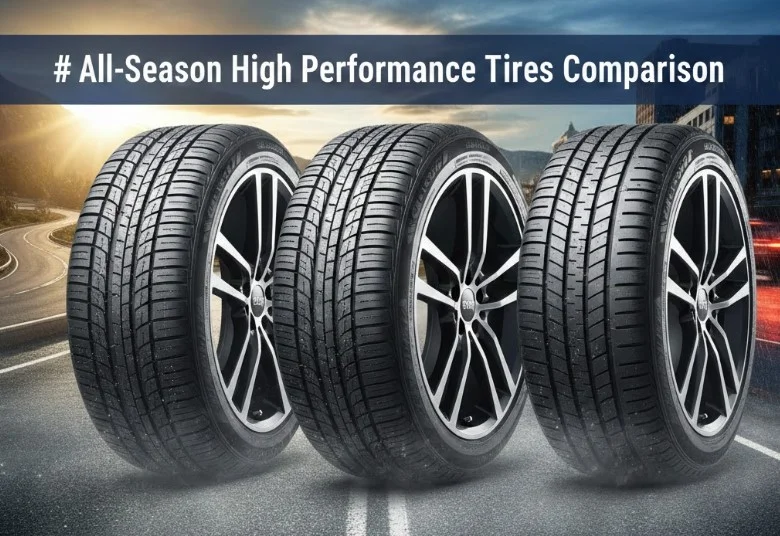
An All-Season High Performance Tires Comparison You Can’t Miss
The quest for the perfect blend of dynamic handling, tenacious grip in varied conditions, and year-round usability leads us directly to the exhilarating world of all-season high performance tires comparison.
Choosing the right rubber for your performance vehicle is a decision that significantly impacts every aspect of your driving experience.
This critical segment of the tire market is designed for the driver who demands responsiveness and sportiness without the hassle and expense of swapping between dedicated summer and winter sets. We’re diving deep into the technology, the key contenders, and the essential metrics you need to consider before making your next purchase.
The burgeoning popularity of powerful sports sedans, performance coupes, and high-end crossover SUVs has fueled unprecedented innovation in this category.
Manufacturers are continually pushing the boundaries of compound chemistry and tread design to deliver a tire that can truly live up to the “all-season high performance” moniker.
The core challenge is the trade-off: achieving the stiff sidewalls and sticky compounds necessary for exhilarating dry and wet handling, while maintaining the flexibility and siping required for safe, dependable traction in cold weather and light snow. This in-depth all-season high performance tires comparison will illuminate the winners in this balancing act.
What Defines “All-Season High Performance”?
Before we compare the top tires, it’s crucial to understand what sets an all-season high performance tire apart from a standard all-season or a dedicated summer tire.
Stiffer Construction for Enhanced Responsiveness and Stability
The fundamental difference between a basic all-season tire and a high-performance variant lies in the structural integrity and rigidity of the tire carcass, particularly the sidewalls and the internal belting package.
In an all-season high performance tires comparison, tires must exhibit a stiffened construction to minimize tire roll and deflection during aggressive maneuvers. This involves using high-tensile steel belts and often two or more layers of cap plies (usually nylon or aramid) over the belts to prevent the tread from ballooning at high speeds.
The sidewalls are specifically engineered to be less pliable, which translates directly into superior steering feel: when the driver turns the wheel, the tire reacts almost instantaneously, transferring the steering input to the road with minimal delay.
This reduction in “slushiness” during initial turn-in and throughout a corner is what gives the driver confidence and defines the “performance” aspect, allowing for higher lateral G-forces to be achieved before the tire loses traction.
This is essential for powerful modern vehicles that demand precise control at speed, setting them far apart from conventional touring tires designed primarily for comfort.
Advanced Silica Compounds Maintaining Flexibility Across Temperature Extremes
The core technological breakthrough enabling the “all-season” capability in a performance context is the rubber compound itself. Traditional summer performance tires rely on compounds that are extremely sticky and grip-focused at high temperatures but become rigid and dangerously brittle below 7℃ (45℉).
All-season high performance tires overcome this limitation through the use of advanced polymer and high-load silica mixtures.
These sophisticated compounds are chemically engineered to retain elasticity and pliability even as temperatures drop below freezing, ensuring that the tire can still conform to the road surface to generate friction and grip in cold, dry, or slightly wet conditions.
Simultaneously, these compounds must be robust enough to withstand the heat and shear forces generated during high-speed, aggressive summer driving without melting or prematurely degrading.
This dual-purpose chemistry, being soft enough for cold traction yet hard enough for high-speed stability, is a major innovation and the defining feature that allows these tires to remain safely mounted on a performance vehicle 365 days a year, a key element to evaluate in any all-season high performance tires comparison.
Asymmetrical and Directional Tread Designs Optimized for Dual Performance
The tread pattern of an all-season high performance tire is a carefully calculated compromise, often utilizing an asymmetrical design to allocate different zones of the tire for specific functions. The outer shoulder of the tire is typically comprised of large, solid tread blocks with minimal siping.
This large contact area provides maximum rubber-to-road contact when cornering aggressively, boosting dry grip and lateral stability, the “performance” side of the equation. Conversely, the inner portion of the tread features an intricate network of smaller blocks, high-density siping (tiny slits), and wide circumferential grooves.
These elements are dedicated to the “all-season” tasks: the sipes create numerous biting edges vital for grabbing onto slush and light snow, while the wide grooves efficiently channel water away from the contact patch to prevent hydroplaning in heavy rain.
This strategic division of labor ensures that the tire performs admirably in dry conditions while maintaining critical safety margins when faced with wet roads, cold temperatures, and minimal snowfall, making the tread geometry one of the most important aspects when undertaking an all-season high performance tires comparison.
High-Density Siping for Light Snow and Slush Traction
The incorporation of sophisticated siping is what truly differentiates these tires from their summer counterparts. Siping, the thin slits cut across the tread blocks, is the primary mechanism for generating traction on packed snow and ice surfaces where the compound itself cannot generate sufficient grip.
In all-season high performance tires, this siping is not merely superficial; modern designs often employ 3D, interlocking, or wave-pattern sipes. These designs are engineered to open up and create thousands of gripping edges when the tire rolls over a soft surface like snow, improving acceleration and braking.
When the tire is subjected to lateral forces during cornering on dry pavement, these interlocking patterns resist bending and lock together, effectively stiffening the tread block.
This ingenious design prevents the siped blocks from becoming too squishy under aggressive driving, thus maintaining the high-performance handling characteristics required while still providing the necessary bite for cold and snow conditions.
Elevated Speed and Load Ratings (V, W, Y, Z)
The “high performance” designation is officially verified by the tire’s speed rating, which indicates the maximum sustained speed the tire is rated to handle. Standard all-season tires often carry H (up to 210 km/h or 130 mph) or V (up to 240 km/h or 149 mph) ratings.
However, for a true all-season high performance tires comparison candidate, the requirement is almost always W (up to 270 km/h or 168 mph), Y (up to 300 km/h or 186 mph), or occasionally Z (over 240 km/h or 149 mph, but typically used for extreme performance ratings).
These high ratings certify that the tire’s construction, including the internal belt package, bead area, and compound, can withstand the immense centrifugal forces and heat generated at these velocities without structural failure.
This emphasis on high-speed capability is fundamental, confirming the tire’s suitability for vehicles with significant horsepower and top-speed potential, and serves as an objective marker of the tire’s performance pedigree.
The Top Contenders in the All-Season High Performance Tires Comparison
The segment for all-season high performance tires comparison is arguably the most fiercely contested in the entire tire industry, driven by the desire of premium and sports car owners to maximize their vehicle’s dynamic capabilities without sacrificing the convenience of year-round use.
The top contenders are not just tires; they are engineering marvels that represent the pinnacle of compound chemistry and structural design.
Here is an expanded look at the leading models that consistently defined the top tier of any serious all-season high performance tires comparison, including their average performance ratings and an explanation of the scores.
1. Michelin Pilot Sport All Season 4 (PSAS4)
Average Rating: 9.1 / 10
The Michelin Pilot Sport All Season 4, or PSAS4, is consistently rated at the top of the Ultra High Performance All-Season category.
Its high scores, often reaching 9.3 and 9.4 in Dry Traction and Steering Response, reflect its primary engineering goal: to deliver a driving experience that closely mimics a dedicated summer Ultra High Performance (UHP) tire.
The slightly lower scores in Light Snow Traction (typically around 8.0) compared to its best competitors explain why its overall average isn’t a perfect 10.
Its Extreme Silica+ technology and robust, asymmetrical tread are optimized for maximum grip and immediate reaction, translating to superior handling and cornering stability that drivers of performance vehicles demand.
The high scores in Wet Traction (around 9.1) confirm that this performance focus does not come at the expense of safety in the rain.
The PSAS4’s rating profile clearly shows it is the undisputed leader for the driver whose definition of “all-season” leans heavily toward the “performance” side, prioritizing exhilarating dry and wet handling above deep winter capability or maximum ride comfort.
2. Continental ExtremeContact DWS06 Plus
Average Rating: 9.5 / 10
The Continental ExtremeContact DWS06 Plus (Dry, Wet, Snow) often achieves the highest overall average rating in this category due to its exceptional balance across a diverse range of metrics.
Its strength lies not in any single peak performance metric, but in its ability to score consistently high in nearly every category, from Handling (9.8) and Traction (9.7) to Light Snow Traction (around 8.2) and Longevity (8.9).
This balanced excellence explains the impressive overall score. The slightly lower score in Longevity compared to an absolute touring tire is a necessary trade-off for the advanced SportPlus Technology compound, which remains soft enough for excellent cold and wet grip.
Furthermore, its better-than-average rating in Light Snow Traction is a testament to its high-density siping and the “S” indicator design, giving drivers greater confidence in unpredictable, four-season climates.
The DWS06 Plus is the quintessential choice for a performance-minded daily driver who demands year-round reliability and a strong mileage warranty without the typical noise or rigidity penalties of a pure performance tire.
3. Bridgestone Potenza Sport A/S
Average Rating: 9.1 / 10
Bridgestone’s Potenza Sport A/S immediately earns high marks in the core performance areas, often scoring at or near 9.4 in both Handling and Traction categories. The strength of this tire in an all-season high performance tires comparison is its impressive blend of a sporty, responsive feel with a good tread life warranty for its class (often up to 50,000 miles).
This is largely due to the modern PeakLife polymer technology compound. Its performance rating is highly driven by excellent feedback from drivers on its high-speed stability and very capable wet-weather performance.
Like the Michelin, the Bridgestone’s aggressive design for dry and wet grip means its scores in Light Snow Traction (typically in the mid-7s) are generally a point or two lower than the Continental, confirming its bias toward performance driving in non-severe winter conditions.
The high overall rating reflects its success as a modern UHP All-Season contender that sacrifices minimal performance feel for the sake of all-season functionality and a competitive warranty.
4. Falken Azenis FK460 A/S
Average Rating: 8.7 / 10
The Falken Azenis FK460 A/S is a critically acclaimed value leader, and its highly positive customer reviews often translate to average scores in the upper range of 8, such as Dry Traction and Wet Traction hitting 9.0 and 8.7, respectively.
These scores place it extremely close to the premium leaders, which is highly impressive given its more accessible price point. The slight reduction in its overall average, particularly in areas like Light Snow Traction (often in the lower range of 7), is the primary differentiator from the top tier.
However, the tire earns significant praise for its excellent Ride Quality and Low Noise, often being cited as noticeably quieter than the Michelin PSAS4, a huge win for the daily commuter.
The use of Advanced Nano 4D Technology and Emerging Grooves enables it to maintain high performance and good wet-weather capabilities as the tire wears.
The FK460 A/S’s high rating relative to its cost solidifies its position as the best choice for the enthusiast who prioritizes high performance and daily comfort without wanting to pay the absolute top-tier price.
5. Pirelli P Zero All Season Plus 3
Average Rating: 9.3 / 10
Pirelli, a brand synonymous with Formula 1 and exotic performance vehicles, brings its racing heritage to the UHP all-season segment with the P Zero All Season Plus 3.
This tire is engineered specifically as a high-mileage, high-performance replacement for premium sports coupes and luxury sedans, earning its high rating through near-perfect scores in Handling (often 9.9) and Traction (9.9).
The scores reflect Pirelli’s focus on longitudinal stiffness and a wide footprint, which translate into razor-sharp steering response and superior high-speed stability. The “Plus” designation signifies a focus on longevity, backed by a competitive 50,000-mile limited warranty, which boosts its overall value score compared to older pure-performance tires.
The high rating is justified by its proprietary 3D interlocking sipe system and larger longitudinal grooves, which ensure exceptional wet performance and braking while keeping the “performance” feel intact.
The slightly lower scores in Noise/Comfort (typically mid-range of 8) are an acceptable trade-off for its aggressive grip profile. For the driver who demands Italian race-inspired handling and braking in all seasons, the P Zero All Season Plus 3 consistently ranks as one of the best high-end options in the all-season high performance tires comparison.
6. Yokohama Advan Sport A/S+
Average Rating: 8.9 / 10
Yokohama’s Advan Sport A/S+ is a highly rated alternative that strategically balances crisp handling with superior acoustic comfort, making it a favorite for performance sedans and coupes where a quiet cabin is highly valued.
Its rating is driven by excellent results in Dry Traction ($9.3$) and surprisingly high scores in Treadwear/Longevity (9.2 on some scales), backed by a strong warranty for its class.
Yokohama achieves this through its HS-2 compound, which features a high silica content for enhanced wet grip and cold-weather flexibility, combined with an optimized contact patch designed to minimize uneven wear.
The A/S+ scores consistently high in Ride Quality and Noise (often mid-8s), differentiating it from the more aggressive, and often louder, PSAS4. While its ultimate lateral grip in extreme cornering may be a hair below the Michelin, the difference is negligible for all but the most dedicated track drivers.
The A/S+ offers a brilliant compromise: precise, responsive handling when pushed, coupled with a notably quiet and comfortable daily commute, solidifying its place as a top-tier contender in this all-season high performance tires comparison for the luxury-performance segment.
7. Goodyear Eagle Exhilarate
Average Rating: 9.0 / 10
Goodyear’s flagship Ultra High Performance All-Season entry, the Eagle Exhilarate, aims to blend the brand’s long-standing reputation for durability and all-weather confidence with modern, aggressive handling.
Its high overall rating is built on strong, consistent performance across the board, particularly in Wet Braking (often 9.1) and Dry Handling (9.0).
This is attributed to its ActiveGrip Technology and ActiveBraking Technology, which employ an asymmetrical tread with deep circumferential grooves and substantial shoulder blocks to maximize grip and stability under aggressive driving conditions.
The Goodyear Exhilarate delivers a notably confident and secure feeling, especially in transitional maneuvers (e.g., lane changes or sudden swerves).
Its tread features large, robust blocks that contribute to high-speed stability and sharp steering feedback, but, similar to the PSAS4, this structural rigidity can sometimes lead to slightly lower scores in Ride Comfort compared to the Continental DWS06 Plus.
However, its balanced profile, backed by a respectable 45,000-mile warranty, ensures it is a reliable and powerful choice for muscle cars and high-performance SUVs looking for aggressive looks and tenacious grip in an all-season high performance tires comparison.
Key Performance Metrics for Comparison
When performing an all-season high performance tires comparison, simply reading reviews is insufficient; a driver must understand the technical metrics that quantify performance.
These key areas determine the quality of the driving experience and, crucially, the margin of safety the tire provides across diverse conditions.
Dry Grip, Lateral G-Force, and Steering Response
This metric directly addresses the “high performance” aspect of the tire. Dry grip is primarily measured by the maximum lateral G-force the tire can generate on a skidpad before the vehicle begins to slide.
A higher G-force indicates superior adhesive friction, allowing the vehicle to maintain higher speeds through corners. Closely related is Steering Response, which is a measure of how quickly and precisely the tire reacts to steering inputs. This is influenced by the tire’s construction, particularly the stiffness of its sidewall and the rigidity of its tread blocks.
For a driver, strong performance in this category translates into a communicative and immediate feel. The best tires in this all-season high performance tires comparison feel “connected” to the road, allowing for quick, confident changes in direction at highway speeds or during spirited backroad driving.
Tires like the Michelin PSAS4 are engineered with a specific bias toward high lateral grip, using large, minimal-void outer shoulder blocks to maximize the contact patch when the vehicle’s weight is shifted aggressively to the outside of a turn.
Wet Braking Distance and Hydroplaning Resistance
Wet performance is often cited as the most critical safety metric for any all-season high performance tire, as it dictates the tire’s ability to maintain control and stop in hazardous rain-slicked conditions.
This area is measured by two primary metrics: Wet Braking Distance (the distance required to stop from a set speed, like 80 km/h, on wet asphalt) and Hydroplaning Resistance.
The latter is quantified by the speed at which the tire begins to lose contact with the road surface in standing water, typically tested both longitudinally (straight line) and laterally (while cornering).
Superior wet performance relies on two key components: the advanced silica content in the rubber compound, which acts like microscopic suction cups on wet pavement, and the tread design’s ability to rapidly evacuate water. Wide circumferential grooves are essential for this drainage.
Tires that excel here, such as the Continental DWS06 Plus, instill confidence in heavy downpours, reducing the risk of a catastrophic loss of control and demonstrating that the tire’s sophisticated engineering is ultimately focused on driver safety.
Light Snow Traction and Cold-Weather Handling
This is the acid test for the “all-season” claim and where the category must compromise with summer performance. Light Snow Traction is primarily measured by the tire’s ability to accelerate and brake on a packed snow surface.
More importantly, Cold-Weather Handling assesses the tire’s performance on dry or wet pavement at temperatures below 7℃ (45℉). Below this threshold, summer performance tires harden dramatically and lose significant grip.
All-season high performance tires succeed here due to their complex rubber compounds, which are engineered to remain pliable in the cold, and their dense network of siping. These tiny, often three-dimensional, cuts in the tread blocks create biting edges necessary for mechanical keying into snow and ice crystals.
While no UHP All-Season tire can match a dedicated winter tire in deep snow or severe ice, the best contenders offer enough reliable traction to handle occasional snowfall and consistently cold winter mornings, preventing the need for seasonal tire changes for drivers in mild-to-moderate winter climates.
Tread Life, Rolling Resistance, and Speed Rating
These metrics encompass the durability, efficiency, and ultimate capability of the tire, rounding out the all-season high performance tires comparison. Tread Life is estimated by the manufacturer’s limited mileage warranty, indicating the expected lifespan of the tire under normal driving conditions.
This is a crucial value metric, as performance tires inherently use softer compounds that tend to wear faster. Rolling Resistance measures the energy lost as the tire rolls, directly impacting fuel economy. Lower resistance means less fuel consumed, a growing consideration for high-performance drivers.
Finally, the Speed Rating (e.g., W, Y, or Z) is a non-negotiable metric that validates the tire’s structural integrity. It confirms the maximum speed the tire can safely maintain under load, a fundamental requirement for vehicles with high horsepower and top-speed potential.
The combination of a high speed rating with a competitive tread life warranty, such as that offered by the Continental or Pirelli Plus models, signifies a successful technological achievement in balancing performance with real-world cost of ownership.
Ride Comfort, Noise Level, and Handling Feedback
While less objective than grip and braking distances, Ride Comfort and Noise Level are crucial metrics for a premium product often fitted to luxury performance vehicles. Noise is measured in decibels at various speeds and road surfaces, with pattern noise and road rumble being the primary contributors.
Stiff, large tread blocks and aggressive patterns, necessary for high-speed grip, often generate more noise, creating a trade-off that manufacturers must carefully manage.
Ride Comfort refers to the tire’s ability to absorb road imperfections. The stiffer sidewalls required for sharp Handling Feedback (the feeling the driver receives through the steering wheel about the road surface) can often lead to a firmer ride.
A premium high-performance tire, like the Yokohama Advan Sport A/S+, excels by finding a “sweet spot”: delivering precise, responsive handling while effectively filtering out harsh impacts and excessive road noise, thereby enhancing the overall luxury-performance driving experience.
Conclusion
The modern landscape of all-season high performance tires comparison shows that drivers no longer have to sacrifice performance for convenience. The top contenders in this category have engineered a remarkable balance, providing drivers of performance vehicles with the ability to enjoy exhilarating handling and reliable safety, all year round, regardless of what the weather decides to throw at them. Evaluate your needs, review the technology, and choose the tire that will unlock your vehicle’s full potential.